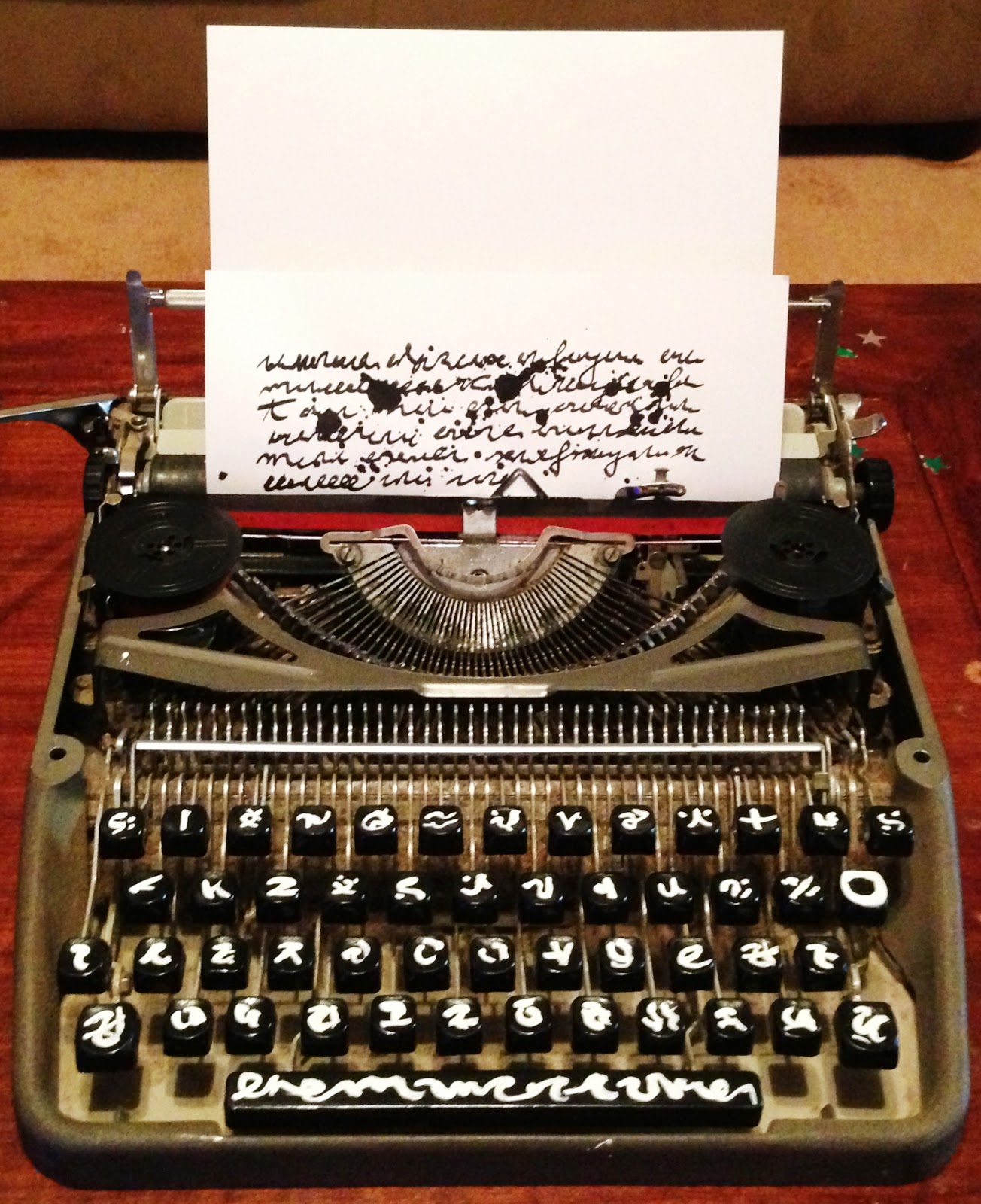
Monday, February 18, 2013

Authors on Artists: Letitia Trent on Francesca Woodman


Four Things about Francesca Woodman
by Letitia Trent

1.       Francesca Woodman is the First Photographer I Knew by Name

Francesca Woodman died in 1981, at the age of 22, by jumping out of a window.  

I wish that this wasn’t the first thing that most people know about Francesca Woodman. Knowing her end means that we search her images for traces of that end everywhere—her blurry body parts are not simply blurry body parts, but hints at her unrecognizable face post-death. Hints of her desire to erase herself. Dying young and by your own hand means that everything you did before that death—even if the death might have been in a fever of self-loathing, a momentary burst of despair immediately regretted as soon as the act became irreversible—is combed for clues, as if you’d always been planning it with every word or diary entry or photograph. Maybe she was. Maybe she wasn’t. Is this a useful way to read the work of any artist? Is it even possible to avoid reading her work this way?

I first saw Woodman’s work in 1999, when I was 18 years old, without the context of the end of her life. I probably did a Yahoo search for “female photographers” or saw her linked on a livejournal page.

When I first saw her work, I had two reactions: I instantly loved her photographs and I knew that we were both obsessed with death. 


2.       Ghosts and Angels

Woodman’s most famous photographs are self-portraits, many of which seem to be about death, or at least the spectral. One set, called “The Angel Series”, features a photograph with two plastic sheets suspended in the air like wings, and Woodman, naked from the waist-up, jumping as though trying to reach them.


In another series, she poses in a decrepit apartment building, the wallpaper peeling to reveal the wall beneath. Her interiors are bleak, haunted places, full of broken objects.


In several of Woodman’s photographs, she is obscured by strips of wallpaper, hidden behind great sheets of it, and pressed against the peeling and dirty walls. Sometimes it seems like her body is trying to sink into the walls of the building, while in others, she is trying to make the body yet another object, and in others, that she is making herself a ghost, a blurry object in the background, caught by accident behind the focal point of the composition. 


In other photographs, her body or the bodies of her models are alarmingly real and confront the camera. In some pictures (rarely, but it’s shocking when it happens), her face is clearly turned toward the camera, often bearing a look of slight amusement or surprise or what seems to be mock seriousness.


3.       Things I Don’t Want to Think About the Way I Think About Francesca Woodman:

It’s almost embarrassing to like Francesca Woodman because she is sometimes called a photographer “for women” and “about women” or “about female identity”, much like Sylvia Plath is often thought of as a “women’s poet”, and it’s sometimes embarrassing to have the mark of Plath on your poems as it is embarrassing to have the mark of Woodman on your photography. Why is it embarrassing? Embarrassing because both women kept journals (a thing often dismissed as “girly” to do, when done by a woman) and both were interested in the physicality of the body and the gothic decay of the body/home and both killed themselves at a young age and both have been dismissed as navel-gazers who used their threats of suicide and their beauty as a way to get attention and (this is really a claim—read any comment thread on an article about Woodman or Plath and see) that they both died to advance their careers.  

It’s embarrassing to be embarrassed about liking things “for women” or “about female identity” because one then realizes how deeply ingrained embarrassment about the female body/art is and, I will begin to say “I” now, it’s embarrassing how sometimes I want somebody to assure me that Woodman actually was the genius I think she is and not a self-obsessed chronicler of her own culturally agreed-upon beautiful body displayed in pieces and blurs or a “kitschy throwback” according to the New York Times or a talented girl who earned her fame partly by throwing herself from a building when she was still beautiful enough for anyone to care.

I would like to read a review of Woodman that does not say or even imply even one of the following ideas: She was talented, but not original. She was clearly a serious artist, but too self-obsessed and narrow. She had a unique vision, but that vision matters mostly because she is dead.

4.       I wanted to be Francesca Woodman

I got my first digital camera in 2000, and the first thing I did with it was create self-portraits in the hot, crowded, ugly rooms of my small apartment. I wore garage sale dresses with rips and unworkable zippers and posed under the table, in corners, on the dirty floor, usually mid-movement. I had an obsessive desire to capture myself in ways that both obscured and highlighted my physical body—I wanted to be there, but not be there. I had learned this from fashion photography, from literature, from Edgar Allen Poe, who said the death of a beautiful woman is the most poetical topic in the world, and so my pictures had an element of erasure, of blurring, of the body disappearing, of death. Somehow, taking a picture of myself in one moment in time felt like performing a kind of death, but I did not understand why, and I wanted to figure it out visually.

Of course, I had also learned this from Francesca Woodman.


Woodman’s use of her own body as an object of inquiry and her staged compositions in crumbling interiors are the easiest surface elements of her work to imitate, but less easy to duplicate are her irony, her interest in looking deeply at how we create identity through reflection and imitation, and her ability to translate internal states into images. I was never very good at it, so I gave it up. I didn’t have the obsessive need that Woodman seemed to have, a need that made her take thousands of meticulously staged, inventive photographs over a period of less than seven years. I also didn’t have the talent.

In one famous image, her photocopied face is held before the faces of three naked women— 


—is Francesca Woodman really in the picture at all? And what does it mean to be in a photograph anyway, to be rendered a flat object amongst other objects? Throughout Woodman’s photographs, there is a thread of obsessive examination and inquiry into exactly what a body is, how we identify a person in a photograph, and what a person is at all anyway, if a person can be both the creator of an image and the representation inside of it.  


***

Letitia Trent's work has appeared in Denver Quarterly, The Black Warrior Review, Fence, Folio, The Journal, Mipoesias, Ootoliths, Blazevox, and many others. Her books include the full-length collection One Perfect Bird and the chapbooks "You aren't in this movie" (dancing girl press), Splice (Blue Hour Press) and The Medical Diaries (Scantily Clad Press). She was the 2010 winner of the Alumni Flash Writing Award from the Ohio State University's The Journal and has been awarded fellowships from The Vermont Studio Center and the MacDowell Colony.


Tuesday, February 05, 2013

Asemic Writing: An International Perspective

Jeremy Balius


Jeremy Balius is an artist living in Fremantle, Western Australia. A collection of work was published in the 'This is Visual Poetry' series (http://thisisvisualpoetry.com/?p=1099) in 2012.


Jean-Christophe Giacottino


Jean-Christophe Giacottino was
born in Bordeaux, France the 29th of  January 1970.
Currently, he lives and works in Aix-en-Provence.
He is an artist (painter, musician) and social worker 

( working with children who suffers from behavioral troubles).


 Dion L Charleton


Monday, January 28, 2013

The Odyssey by Homer by Mairead Case

"A story is not one, as some people think, just because it is about one person." Aristotle, Poetics (Ch. 8)

"Homer's odysseus is a man who wants to eat the world." Anne Carson, "Contempts"

"Like the way you dig sunsets, Pony. That's gold. Keep that way; it's a good way to be." Johnny's letter to Ponyboy in S.E. Hinton's The Outsiders


Here are odysseys, meaning stories about people who started at home and are trying to get back to it. They are heroes moving moving moving, holding their ground, meeting monsters. They are curious and scared and lusty. I think a lot about the odyssey right now you guys, about leaving to come back truer and cloaked, and stay. To come back to love. To Argus. In some cases I probably archived with a romanticism not intended by my sources--so thank you for allowing me that liberty.

Everything here is from GRAPE POP, the Tumblr I used to keep, or the moodboard I keep now, for the novel I'm writing. To shape I used italics from my ninth grade English study packet, which had excerpts from W.H. Auden's The Quest Hero. Most importantly, a huge thanks to Bright Stupid Confetti, for being so awesome for so long.

M.


I. Homer calls on the muse

And whoever listens to me: being
there, and not being, lost and found
and lost again: Thank you for the feather on my tongue, 
thank you for our argument that ends,
thank you for my deafness, Lord, such fire
from a match you never lit.

Ilya Kaminsky, from "Deaf Republic: 14." "This story of a pregnant woman and her husband living during an epidemic of deafness and civil unrest was found beneath the floorboards in a house in Eastern Europe. Several versions of the manuscript exist."

Fred Frith, Iva Bittovà, and Pavel Fajt, "Morning Song"


Why does Homer begin in the middle of the story?
George Kuchar, "Wild Night In El Reno." "This movie began the weather diary cycle . . . The motel I was staying at [was] the only one that had an underground cellar. This was comforting when twisters threatened but was not well managed as the doors were unhinged making it more like sliding open a lid rather than opening a portal."


"The persistent appeal of the Quest as a literary form is due, I believe, to its validity as a symbolic description of our subjective experience as historical." (Auden)
Mike Getsiv, via Abstract Comics. "This is a folk tale about traveling to another land, fighting in a battle, and coming home drunk."

Warja Lavater, Le Petit Chaperon Rouge (Maeght éditeure) 


Matt Madden, page from 99 Ways to Tell a Story: Exercises in Style (adapted from Queneau)


Mentes flies away! So Telemakhos guesses that his visitor is a god.
Carlo Polito, of Bianca Passarge in 1958, age 17. "Her performance was based on a dream and she practiced eight hours every day."


ATHENA:
"Gray-Eyed"; "Flashing-Eyed"
(defeats Ares, God of War)
Men and Sia, "Credit Card Babies" via Joly MacFie's Punkcast


HERMES: 
Conductor of dead souls, divine herald
Master thief and patron of businessmen
Bill-Dale Marcinko, AFTA (Ascension from the Ashes). "I have lived in New Jersey all my life. I have wobbled between the simple strength and good country wisdom of small towns and big families and the intellectual cynicism of the big cities. My idols are Woody Allen and Bruce Springsteen. I have always been at war with myself. I write. When I write, I think I am building highways where people can escape their towns when the mines close down . . . The model for AFTA is a broken down roller coaster at Bertrand's Island Amusement Park in Hopatcong, NJ. I want to fill it with bumps and twists."


Why hasn't Odysseus been able to get home?

Brecht Evens, The Wrong Place

This was the Green Day I loved: tangled up in a pile on the floor, with me underneath. What other old friends of mine still danced in public and were still unafraid to embarrass themselves? Only Eggplant came to mind. He would have enjoyed this. 
Mike extricated himself from the pile-up but let the needle spin in the grooves at the end of the disc. There was a momentary lull while everyone dusted themselves off and attended to their injuries. Billie motioned to me to join him on the dance floor. Over the speakers came the notes that never failed to give me goosebumps: the opening chords of the greatest song of all time, "Kiss Me Deadly" by Generation X.  
Dancing in the middle of a maelstrom was different than with just one person in the center of the room. I deferred, but Billie knew me better than that. "Please drag me out onto the dance floor," is what I really meant. 
He did, and everyone else gave us space. 
I'd needed to shake off the self-consciousness and lethargy that had come to me with age. Touring with Green Day had been great for that, because I got to dance--but only to the band, not with them. Once upon a time, Billie and I had danced together at every show. Until now, I hadn't realized how much I had missed that. 
Dancing together was sexy, it was sweet. It was everything that friendship--and being on tour--should be. It was the prom night I never had, done right.  
It was like a dream. As the song concluded, he wrapped me in his arms, leaned me over, and gave me a long and tender kiss.  
I went to sleep grinning and woke up the same way, thinking: "Goddamn if that wasn't one of the funniest fucking nights of my life!"


Describe Nausikaa.
Felix Gonzalez-Torres, "Untitled (Perfect Lovers)"


How does Nausikaa assist Odysseus?
Arabelle and her dad, "Amazing Technicolor Hair Dyeing" at Rookie
The houses in the village were all rose-colored. We painted them every spring and maybe for that reason the light was different. It captured the pink from the houses, the same way it took on the color of leaves and sun by the river. Shut inside in winter, we made horsetail paintbrushes with handles of wood and wire, and when we had finished them, we stored them in the shed in the Plaça and waited for good weather. Then all of us, men and boys, would set out for the cave on Maraldina in search of the red powder we needed for pink paint. The mountain was covered with heather and crowned by the dead tree, and the wind whistled through the brush. We climbed down to the cave along a knotted rope that had been fastened to a stake. The man who led the way carried a lamp. We lowered ourselves into the damp, black, well; it was streaked with veins that would glisten in the sun, then slowly extinguish as we moved deeper and darkness fell, swallowing everything. Through the well we entered the cave, which was like the mouth of the infirm: red and damp. We filled our sacks with powder, tied them tight, and the men who stayed above hoisted them up and stacked them, one on top of the other. When we returned to the village, we would mix the crimson powder with water to make the pink paint that winter would erase. In spring--the blossoming, blooming wisteria draping the houses, bees buzzing--we painted. And suddenly the light was different.
Merce Rodoreda, Death in Spring
Here is what I know: use carnaroli rice, not arborio (more amylose = creamier, less gluey). Use fresh vegetables, good stock, good wine, fresh black pepper. Fresh everything, the freshest you can find. You are making a national rice dish, not the penne primavera at Tommy's Family Restaurant in North Bellmore. This is food you can take a bow about . . .
 "Risotto," Porn Soda


Describe Odysseus' encounter with the Lotos-Eaters.
Jamie Harley, Koudlam's "Alcoholic's Hymn" with footage from Mondo Cane


Who is Polyphemos? What kind of creature is he? Be specific.
Muppets (adapted from chenille hats!) by Caroly Wilcox


How does Odysseus manage to escape from the Kyklops?
Luce and Pierre Morel, Glo-Glo le poisson-rouge, via 50 Watts


Who is Aiolos and how does he assist Odysseus?
T.L. Barrett and the Youth for Christ Choir, "Ship Without A Sail" (Light in the Attic Records)


Describe Odysseus' encounter with the Laistrygonians.


X: They row

The idea behind making those tapes was to create a musical trip starting at one tempo and building it to another level. I would vari-speed the songs slowly so the intensity would be building all the time. 
Tom Moulton to Donald A. Guarisco 

and row
John Divola, Dogs Chasing My Car In The Desert

and row.
Geoffrey Jones, Snow with soundtrack by Daphne Oram


ZEUS: 
Lord of the Sky; The Thunderer; The Cloud-Gatherer
"lettre to cleveland" by d.a. levy, "lettre to cleveland" printed by Brother in Elysium


I am conscious of myself as unique--my goal is for me only--and as confronting an unknown future; I cannot be certain in advance whether I shall succeed or fail in achieving my goal. (Auden)
Guy Ben-Ner and his daughter Elia, Moby Dick

Jack Hannah, Lambert the Sheepish Lion

Jim Woodring, Visions of Frank animated by T. Fuyama


Who are Skylla and Kharybdis? What happens when Odysseus meets them?
Danny Plotnick, Skate Witches


0. Prologue: the Tentacular Novum
Taking for granted, as we do, its ubiquitous cultural debris, it is easy to forget just how radical the Weird was at the time of its convulsive birth. Its break with previous fantastics is vividly clear in its teratology, which renounces all folkloric or traditional antecedents . . . 
China Miéville, "M.R. James and the Quantum Vampire" in Weird Fiction Review


Lesser gods and creatures: IRIS, goddess of rainbow
Tauba Auerbach, "RGB Colorspace Atlas" 


Fruit Bats, "Rainbow Sign"


What advice does Athena give Telemakhos?
The Mountain Goats, "You Were Cool"


Describe the reunion between Odysseus and his son.
My cat is back. Quacking and faking blindness but back.
Mary Robison, Why Did I Ever


How did Odysseus receive his name?
Ruth Krauss, in response to G.C. Haymes


Where, according to Penelope, do dreams come from?
The Ideal School Supply Company, Forming Sounds via Public Collectors


Describe the behavior of the Suitors. Be specific; use examples.
I have always had a poor understanding of how one thing fits into another. As a child I thought Santa Claus was a property of chimneys, ate fortune cookies whole, and was phobic of sleeping bags. For some reason the hardest thing for me has been to differentiate between coffins and hot dog buns. I apologize in advance for my behavior at your barbecue and/or funeral.
Sarah Galvin, "Midnight Haiku" at The Stranger


Describe the reunion between Penelope and Odysseus. What convinces Penelope that the "stranger" is indeed her husband?

Linda Bruner, "Wichita Lineman" (Numero Group)


What is the situation on Ithaka when the Odyssey ends?
Nathaniel Russell, "Fliers and fake books"
I think he's a real hero. A lot of people who have read the novel think that Stoner had such a sad and bad life. I think he had a very good life. He had a better life than most people do, certainly. He was doing what he wanted to do, he had some feeling for what he was doing, he had some sense of the importance of the job he was doing. He was a witness to values that are important . . . The important thing in the novel to me is Stoner's sense of a job. Teaching to him is a job--a job in the good and honorable sense of the word. His job gave him a particular kind of identity and made him what he was . . . It's the love of a thing that's essential. And if you love something, you're going to understand it. And if you understand it, you're going to learn a lot. The lack of love that defines a bad teacher . . . You never know all the results of what you do. I think it all boils down to what I was trying to get at in Stoner. You've got to keep the faith. The important thing is to keep the tradition going, because the tradition is civilization.
John Williams

Wednesday, January 16, 2013

Authors on Artists: Janice Lee on Christian Cummings and Michael Decker


On Spectral Psychography
by Janice Lee

I first had the opportunity to see Los Angeles artists Christian Cummings and Michael Decker perform Spectral Psychography at Machine Project in September 2012. I had heard of them years before through writer/friend Harold Abramowitz and had been intrigued by these Ouija board performances.

Spectral Psychography is defined as:

…  a method for psychic mark making. A Psychographer will use an adapted Ouija device (planchette) to collaborate artistically with unseen forces. Blindfolded, the hand forms an image while the mind remains unaware.

During a performance at Machine Project, I was struck by the context of this as a “performance.” Was this really a performance? Or something else? Was this for real? Was this an elaborately planned artists’ staging? Or were they really communicating with ghosts? As the evening progressed, I became convinced that it didn’t really matter whether this was a sham, but that at least for me, something was happening.

I then invited Christian and Michael to perform at Novum, an interdisciplinary series I co-curate with Laura Vena. The word novum is important because it’s related to how I envision narrative and aesthetic possibility. When I think of experimental narrative, I view it through the lens of Carl Jung’s theory of synchronicity, relating processes of writing and reading to paranormal processes.

Istvan Csicsery-Ronay Jr. writes, “As the sentences build up, we build up a world in specific dialogue, in specific tension with our present concept of the real.” Through the labored interaction of reading language and the world around us, one can interact with his/her own ideological embeddedness on a profound level. Ernst Bloch uses the term novum to describe “a moment of newness in lived history that refreshes human collective consciousness, awakening it from the trancelike sense of history as fated and empty, into awareness that it can be changed... the unexpectedly new, which pushes humanity out of its present toward the not yet realized,”... towards a “blankness of horizon of consciousness... formed not by the past but by the future... a not yet conscious ontological pull of the future, of a tidal influence exerted upon by that which lies out of sight below the horizon, an unconscious of what is yet to come.” Parallel to Badiou’s “event,” the novum derives its significance from its effect on human consciousness. “Each instance of the Novum is a hypostatized moment of apocalyptic cognition; and each such moment of cognition is a recognition.”

To me, these performances become about our own constant negotiation with the unknown and the uncertain, with our own troubled relationships with belief.

In his new book 2500 Random Things About Me Too, Matias Viegener remarks, “It has already bothered me that we have such a prejudice for things that exist over things that don’t exist. It’s a failure of ambition. It means we can’t imagine anything that isn’t already there.”

Jeffrey Kripal dedicates his book Authors of the Impossible to an investigation of the paranormal as meaning. The project “is based on the wager that new theory lies hidden in the anomalous, that the paranormal appears in order to mock and shock us out of our present normal thinking. Seen in this way, psychical and paranormal phenomena become the still unacknowledged, unassimilated Other of modern thought, the still unrealized future of theory, the fleeting signs of a consciousness not yet become a culture.” He continues: “Such [paranormal] events are thus not just casually, occasionally, or anecdotally anomalous. They are structurally and cognitively anomalous.”

Harvard psychiatrist John E. Mack too illustrates how “psychical phenomena of abduction reports violate our present epistemology and worldview.” He remarks, “[W]e have a kind of either/or mentality. It’s either literally physical, or it’s in the spiritual other realm, the unseen realm. What we seem to have no place for—or we have lost the place for—are phenomena that can begin in the unseen realm, and cross over and manifest and show up in our literal physical world.”

In today’s world, belief has become a strange aesthetic category. This “either/or” mentality isn’t just about physical vs. spiritual, but also real vs. not real. Is this real? Is this possible? Does science support it?


Before Christian and Michael’s performance, Margaret Wertheim gave a fabulous introduction on this very idea of belief. Focusing on Dante’s writings and ideas about Purgatory, she outlined the evolution of scientific “truth” and belief. She elaborates in her book The Pearly Gates of Cyberspace:

Stories about journeys to and from the realm of the dead tend to evoke deep skepticism in we “scientifically-minded” moderns. The question thus arises: Whatever the exploits of the virtual Dante, did the actual historical Dante really believe in this vision of the afterlife? Did he and his contemporaries really believe there was a vast chasm inside the earth? Did they really believe in a terraced mountain opposite Jerusalem? Did they really believe in a set of heavenly crystal spheres? … A major problem, I suggest, is that the very questions raised here are quintessentially modern. They are framed within the context of our purely physicalist paradigm, which was quite alien to medieval mind-set.

Margaret Wertheim went so far as to state that to ask the question of whether this is true or not is already an aberration, already an indication of our brainwashed state that prevents us from accepting anything as real unless it has a mathematically precise location in physical space.

Our inclination to categorize and ask questions often confines us into tighter and tighter boxes, until there is less and less space for possibility and discovery. Ufologist Jacques Vallee writes, “Mathematical theory often has to confront the fact that two contradictory theories can explain the same data. A solution is inevitably found not by choosing one of the contradictory theories, but by going to the next, third level.” Ghosts don’t necessarily have to equal the pop culture definition of ghosts. They don’t necessarily have to fit into one of these previously created paradigms. Perhaps, they are something else entirely.

What follows are selections from an interview with Christian Cummings and Michael Decker on Spectral Psychography (SP), as well as photos from the evening’s performance at Novum:

Janice Lee: How did Spectral Psychography start? I've read that it may have started as a way to combat artist's block but why specifically a Ouija board and this process? What was the inspiration and impetus for this project?

Christian Cummings: In the past "Artist Block" was used as a terse catch-all to highlight aspects of its authorship. Specifically, that you don’t actually need ideas to express them.

Michael Decker: And by creating a situation where the only thing at stake is understanding. The ghosts don’t require that we understand them. What we call artist’s block is used as inspiration. 


J: I've read that you (at least you, Christian) are somewhat skeptical of paranormal phenomena and aren't sure yourselves of what to make of these channeled drawings. How did this interest then come about? Do you believe that something paranormal is happening here? Do you see yourselves as "mediums" of some sort? And how does the outcome differ with different collaborators?

C: Something para-average is definitely happening in spite of my beliefs. For me belief is an aesthetic category. Tuesday’s beliefs differ from Friday’s. And on Sunday I’m agnostic. My current theory is something like a hive mind. Not a Borg-centric uni-ego but something more like a cosmic blogosphere. A nexus of connected intelligences publishing their thoughts on the spectral-net simply because they can. But again, who knows. It's Sunday. 

M: We have had experiences that strongly suggest we are talking to dead people. Specifically when given information that we can check in the public record. At one event the deceased co-worker of an audience member visited. They had an at-length conversation about workplace politics.   

J: How would you categorize this project? It seems to get categorized more of an art project, perhaps because you are artists, but do you see these as artistic performances? Or something else?

M: SP is not an easy pill to swallow. Neither is it an easy artwork to sell. What started as an afternoon experiment has become art because it changed the way we think about art. And ghosts have become our mentors.   

C: Thankfully art doesn't have to be art. It can be the something else.

J: How might you respond to skeptics who may believe that these drawings are just a sham and these drawings have been planned by you co-conspirators in advance?

C: A Ouija board and a magic marker. These are our dirty secrets.

M: We’ve been accused of requiring complicit viewers. I prefer the euphemism “playing along” to complicit. I like to think we ask no more than the next artist with respect to playing along.

J: I think the term "playing along" is important. It's especially important to keep an open mind when witnessing your performance, whether or not the audience member is a skeptic or believer. I found myself going back and forth during the performance (and the duration allows for this inner dialogue I think), between trying to "figure it all out" and just being open and observing.

M: Play I think is implied by our use of a Ouija board. Ouija is a game marketed to children and sold in toy stores. Maybe we have taken Ouija beyond its intended function but we do so playfully. Complicity is a very different kind of contract than play. We're not really interested in dictating our terms or obligating our viewers to them. Art can be a game. Mortality and spirituality can be a game. We like to playfully involve everyone in the room, including the ghosts.

C: Wagging between skepticism and belief is a game, like ping-pong played on a teeter-totter. For instance, we wear blindfolds to make SP palatable to our skeptics. We realize that taunting a skeptic’s credulity sometimes invokes it. Using the blindfold as a carrot-on-stick, we invite them to play with us. Similarly, BBQ places that offer boca-burgers will attract some vegetarians (carrots!). A number of them will order ribs and then return to their veggies the following day. I suspect here's a link between play and overcoming dogmas. Could it be our dogmas are more flexible, temporary, and open ended than we give them credit for?


C: Even doubting artists have ideas that appear from “nowhere”. The Ouija is our ghost-phone. We pick it up and our ideas appear from nowhere. There is a portion of me believes we’re connecting to real human ghost-somethings. This is why I say “para-average” instead of paranormal. Paranormal kind of sounds derogatory. I don’t want to offend any ghosts. 

J: Christian, you refer to the idea of authorship. Is this related then to agency? Perhaps to the lack of agency on the part of the spirits? And Michael, I wonder if the ghosts don't require that we understand them, what do you think they require or want from us?

C: Are Michael & I artists? Are we mediums, trans-channels, diviners, extra-dimensional gatekeepers, shaman, prophets, psychics, pranksters with a ghost-phone? Are we possessed or even remote-controlled? Are the tools themselves haunted? Have we accessed an akashic database of personalities stored in the ether? Do our hands move by ideomotor action and the collective unconscious? Are we channeling ghosts, aliens, or Google’s servers? Are they channeling us? Difficult to say who or what is expressing?

In terms of authorship, “self-expression” is at least as para as channeling. This when self becomes an other. Like a possession (a thing you have and a thing that has you).

M: Maybe ghosts come through the board hoping people understand them. It’s true, more often than not the drawings are representational. This suggests some attempt at communication on their end. As far as what they expect from us, I'm not really sure. They seem to enjoy leaving us with more questions than the few of ours they answer.


J: You refer to the "unremarkable" nature of SP, and this is interesting to me because it's one of the things I picked up at your performance at Machine Project. I couldn't quite articulate it at the time, but things like the attitude you maintained towards the spirits, the sort of terse and blunt dialogue with the spirits, the sort of distance from the content of the drawings – you didn't seem to show any emotional investment. It was one struck that stuck me, the tone in which you addressed the spirits, sort of like the same tone you might use to speak to a cab driver. And so now I wonder if all this is intentional, or if you're aware of it? 

C: We’ve met more tweenagers from Orange County than tormented 19th century English maidens with unfinished business. Ghosts are people like you and I. I like it when ghosts are referred to as “Familiars.”

M: We have been communicating with ghosts for a long time. We sometimes forget how taboo this is for some people. But ghosts to us are no different than the people you meet at the grocery store. 

C: People at the grocery store are usually more scary.

J: Though one thing I did notice additionally was Michael during the performance. Christian, you say that you think if there is a psychic element here, you think Michael may possess the gift. In my watching on the screen that was set up at Machine, it seemed often that it was Michael's hands that were doing much of the guiding – whether as a medium or as an impulse. And Michael, you also seemed significantly more "worn" after the performance (though perhaps just from performance anxiety?). I wonder C or M, if you have additional thoughts on the "work" you're doing, ie. the actual labor and concentration that goes into the process, what the process demands from you physically and psychologically.

M: Yes, it's an exhausting practice. I can't explain why. Drains in a way that feels like running a psychic marathon. People often see me as guiding the planchette. I often feel Christian guiding it. I don't know what more to say. Sometimes I do feel I have an idea of what’s being rendered only to remove my blindfold and see something completely different. Other times I think it's me because I can see the marks before they're made or a finished drawing before it is started. These are the uncanny moments that really excite me. Uncanny because the hand still seems to move itself.

C: Michael is a serious antennae. Over the years we’ve cultivated a symbiosis for reading each other's energy. This makes the process very fluid between us.    

J: I'm definitely interested in your art practices outside of SP. What are you guys working on now? Other things you've worked on in the past of relevance? How does SP influence your art practice as a whole? And how do other aspects of your art practice influence SP?

C: I’ve spent the recent few years transforming my yard into a metal foundry for crafting objects made to out-survive our species. I’ve also been making preachy Grungy/Garagey/R&Bish songs about overtly political themes (reviewed in this month’s Artillery Art Magazine), and I'm in post production on a movie recounting the Adam and Eve story. And I have one rather-involved larger project in the works.

In terms of relating SP to my greater practice – what I said about experiencing I as an other is important. I call this the zero-person perspective. I now have a reflex for recalibrating back to zero. 

M: I'm currently working on a number of projects. Some of which are collaborations with other artists and some are independently studio-based practices. I approach art making as a continuous exercise for the unabashed exploration of new things. There is immense freedom in deciding that you are not an authority of what you already think you know and doing something different. Unfortunately, this isn't how the art market likes artists to behave, unless being multidisciplinary and all over the place is justified in some rhetorical fashion. For me its just a means for production and learning new things.

J: At the first performance at Machine Project, Christine Wertheim mentioned two things in her introduction. She talked a bit about the evolution of SP and the various directions you've been able to go. Can you talk a bit more about this evolution and history? She also used pataphysics as a reference in talking about your work and mentioned that she met you for the first time in the pataphysics class she was teaching at CalArts. Can you elaborate on this relationship? I guess I'm thinking about things like the exhaustive potential of pataphysics, the ideology of metaphor, or a fear of the irrational that pataphysics refers to.

C: Many people don’t realize to what extent there’s a history of artists complicating the problem of authorship. Christine’s class followed a vein of “pataphysics” that led us through Oulipo, Surrealism & Proto-Surrealist thinkers, and a larger world of constraint-driven practices (with a pinch of aleatoricism thrown in for good measure). I remember being struck by the level of acumen required to slouch ones creative burdens. Now my favorite libraries are the ones full of books written by people who have nothing to say.


Janice Lee is the author of KEROTAKIS (Dog Horn Publishing, 2010) and Daughter (Jaded Ibis, 2011). She also has several chapbooks Red Trees, Fried Chicken Dinner (Parrot/Insert Press, September 2012), and The Other Worlds (Eohippus Labs, June 2012). Her newest project, Damnation, is forthcoming from Penny-Ante Editions in 2013. She currently lives in Los Angeles where she is Co-Editor of the online journal [out of nothing], Co-Founder of the interdisciplinary arts organization Strophe (which houses the curated series Novum), Feature Reviews Editor at HTMLGIANT, and Founder/CEO of POTG Design. She currently teaches Interface Culture at CalArts. She can be found at http://janicel.com.